Skip to content

Furnace Running but No Heat in Newark? Common Causes and Quick Fixes
When your furnace runs but the house stays cold, it’s frustrating , and sometimes dangerous. This guide walks Newark homeowners through what “no heat” really means, the parts that commonly fail, and safe checks you can try before you call a technician.
You’ll get clear, step-by-step troubleshooting for the thermostat, filter, ignition, and blower, plus the emergency signs that need attention and practical maintenance tips to reduce future breakdowns. We focus on homeowner-safe actions, clear “stop and call a pro” points, and what matters for Newark’s winter demands.
Read on for the most common causes, ignition and blower troubleshooting, emergency warning signs, and preventive care to keep your heating system reliable all season.
Troubleshooting Furnaces That Run but Don’t Produce Heat in Newark

When your furnace is running but not delivering heat, it can be frustrating and even concerning, especially during Newark’s cold months. The issue usually stems from common areas like thermostat settings, airflow restrictions, ignition problems, or safety and electrical system triggers.
Understanding the most frequent causes, along with simple, safe checks you can perform at home, helps you identify what you can handle yourself and when it’s time to call a heating contractor in Newark.
Common Causes of a Furnace Running Without Heat in Newark
When a furnace in Newark runs but won’t produce heat, the issue usually lies in one of four areas: controls and sensors, airflow, combustion/ignition, or safety and electrical systems. Newark’s colder months put extra stress on equipment, so routine checks are more important here. Common causes Newark homeowners see include:
| Cause | Symptom | Safe Homeowner Check |
|---|---|---|
| Thermostat problem | No heat call, blank display, or wrong mode | Set to Heat, raise temperature, swap batteries, and check the display |
| Clogged filter | Weak airflow, short cycling, overheating shutdowns | Find the filter, look for dirt, and replace if it’s clogged |
| Ignition/pilot failure | Furnace tries to start but no flame | Sniff for gas, confirm thermostat call, and check the gas valve (don’t relight if you smell gas) |
| Blower failure | Furnace runs but vents stay cold | Check airflow at vents, listen for the motor, and inspect the filter and access panel |
Thermostat Issues That Prevent Your Furnace from Heating
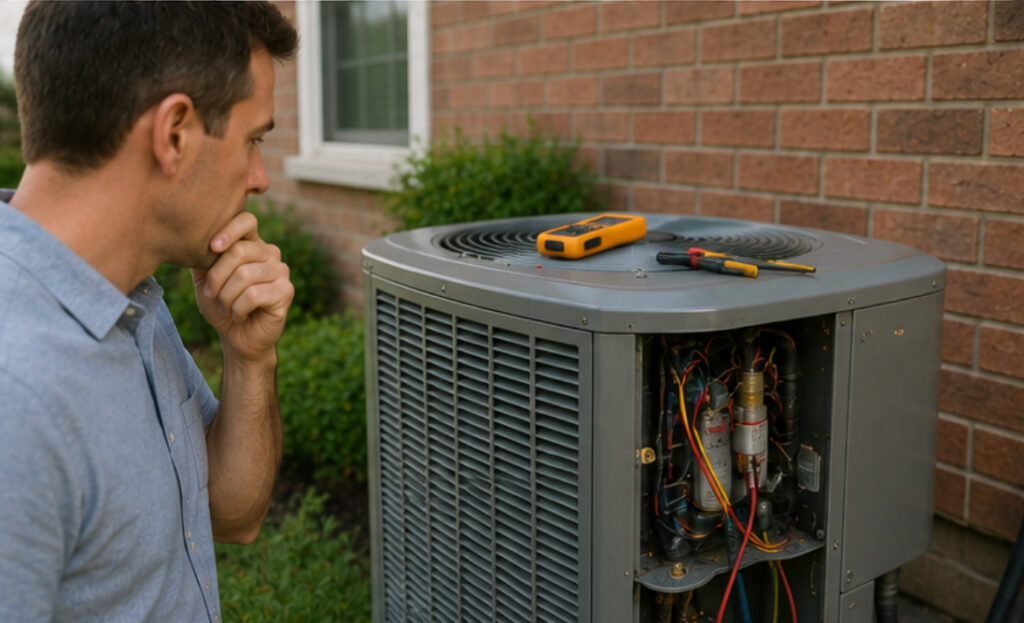
Your thermostat is the “brain” of your heating system; if it’s not communicating correctly, your furnace never receives the signal to heat. Here’s how to troubleshoot common thermostat issues in Newark before calling for help:
Start With the Basics:
- Make sure it’s set to “Heat.” Many Newark homeowners accidentally leave systems on “Cool” or “Fan Only.”
- Raise the temperature above room temperature to trigger a heat call.
- Replace batteries to eliminate low-power miscommunication.
Check the Power Supply:
- Blank display? Inspect the furnace’s power switch, often mistaken for a light switch.
- Verify the thermostat’s breaker in the electrical panel. A tripped breaker interrupts the thermostat’s control board.
Look for Wiring or Control Problems:
- Loose or frayed thermostat wires can cause intermittent heat calls or short cycling.
- Unresponsive buttons or delayed reactions may indicate a failing control cluster or aging internal sensors.
If the thermostat still behaves erratically after resets and battery changes, it’s time for expert attention. A technician can:
- Test voltage and control signals
- Diagnose wiring or board issues
- Replace outdated or malfunctioning thermostats
- Recalibrate settings for accurate heat delivery
A failing thermostat can also be connected to airflow problems, clogged filters, or blower issues, so a full system check ensures your furnace heats safely and efficiently.
Clogged Air Filters Can Stop Your Furnace from Producing Heat
A dirty or clogged air filter restricts airflow, which can cause the furnace in your Newark, NJ home to overheat and trigger limit switches that shut the system down for protection. Common signs include weak airflow from vents, frequent on/off cycling, or unusual heating patterns, issues that Newark homeowners often experience during colder months.
Locate the return grille or the filter slot at the furnace, pull the filter out, and inspect it. Replace disposable filters whenever they look dirty or according to the manufacturer’s schedule. Staying consistent with filter checks helps reduce strain on the blower and heat exchanger, improves heating safety, and ensures efficient furnace performance throughout Newark’s winter season.
Emergency Furnace Repair and Safety in Newark

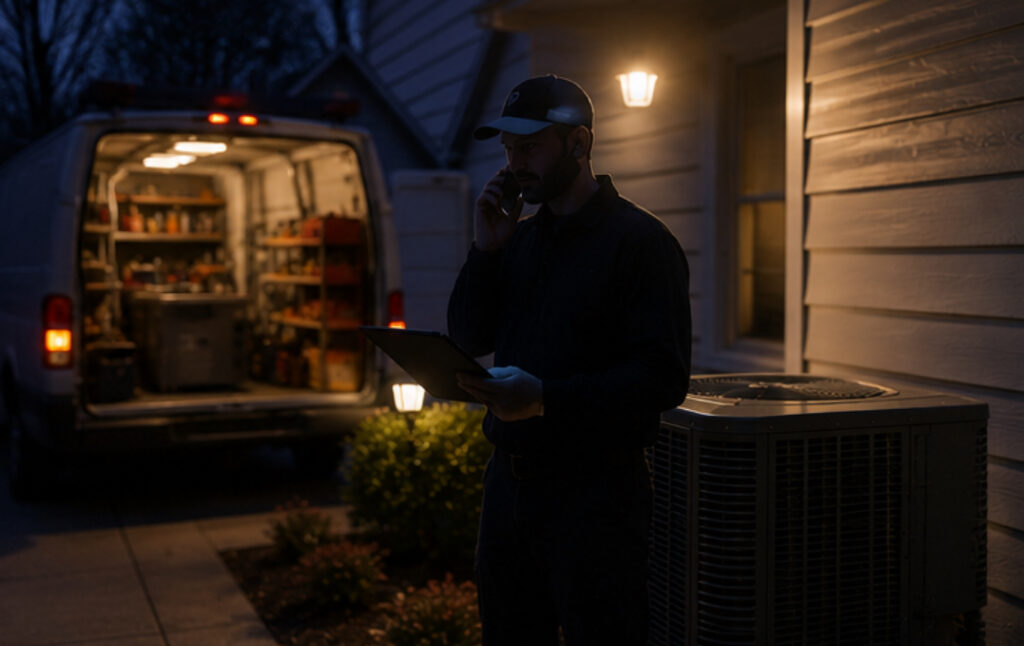
Knowing when to call for emergency furnace service can protect your home, family, and property. Certain warning signs, such as gas odors, carbon monoxide alarms, smoke, or repeated ignition failures, require immediate professional attention.
Understanding the potential risks of cracked heat exchangers, gas supply issues, and electrical faults helps homeowners act quickly and safely, while leaving dangerous repairs to certified technicians.
Calling for Emergency Furnace Repair in Newark
Call for emergency furnace repair in Newark when there’s an immediate safety or health risk, or when basic safe checks don’t restore heat.
If any of these occur, evacuate, avoid using electrical switches, and call emergency service right away. Fast professional response lowers risk to people and property.
Emergency triggers you should not ignore:
- Gas odor: Leave the home and call emergency services; don’t operate electrical devices.
- CO alarm activation or symptoms: Headache, dizziness, nausea , evacuate and seek help.
- Smoke or burning smell: Turn off power if safe and call emergency technicians.
- Repeated ignition lockouts with no heat: The system may be unsafe to operate until diagnosed.
- If you detect gas: Get everyone outside and call for emergency assistance from a safe location.
- If a CO alarm sounds: Evacuate immediately and seek medical attention if anyone feels unwell.
- If smoke or sparks occur: Cut power at the main panel if it’s safe to do so and call emergency service.
Newark’s experts offer 24/7 emergency service with certified technicians ready to respond to these hazards. Newark heating technicians prioritize occupant safety and will explain recommended next steps clearly.
Safety Risks of Cracked Heat Exchangers and Gas Supply Issues
A cracked heat exchanger can allow combustion gases, including carbon monoxide (CO), to mix with your home’s air, a serious poisoning risk. Key points to know:
- CO exposure symptoms: Headaches, nausea, confusion, and flu-like symptoms that often improve when you go outside
- CO alarm: A clear sign to evacuate immediately
- Gas supply problems: Can cause leaks or poor combustion; if you smell gas, leave the home and call for professional help
- Safety warning: Never attempt repairs to the combustion chamber yourself
- Professional solution: Certified technicians use inspection tools and follow code to assess and safely replace heat exchangers
Understanding these risks highlights why certain checks should stop at safe homeowner actions and why calling emergency services is essential in these situations.
Electrical and Circuit Breaker Issues Causing No Heat
Electrical issues can stop furnace controls and ignition from working. A tripped breaker, blown fuse, or an off furnace switch are common, easily fixed causes of a no-heat condition. Safely check your breaker panel for a tripped circuit and reset it once; then restart the furnace and observe.
If the breaker trips again, or if you smell burning or see damaged wiring, stop and call a licensed electrician and an HVAC technician in Newark. Repeated electrical faults can damage control boards or ignitors and need professional repair.
If a single reset restores operation, the problem was an interruption. Repeated trips point to a deeper electrical or component fault that requires specialists.
Stay Warm, Stay Safe! Take Control of Your Comfort This Newark Winter with Maverick Ambitions HVAC

When your furnace runs but delivers no heat, it’s more than an inconvenience, it’s a warning sign. From thermostat miscommunication to clogged filters, ignition failures, electrical issues, or safety shutdowns, even small problems can leave your Newark home cold when you need warmth the most. Now that you know the red flags and the safe troubleshooting steps, don’t wait for the next cold snap to expose a bigger issue.
Professional diagnostics ensure your furnace runs safely, efficiently, and reliably throughout Newark’s demanding winter season. Whether you’re dealing with intermittent heat, repeated shutdowns, or full no-heat emergencies, fast action protects both your comfort and your home.
Stay warm, stay safe, and stay ahead of breakdowns. Book your furnace repair or heating inspection today and keep your Newark home comfortable all season long.