Skip to content

Indoor air quality plays a major role in your home’s comfort and health, yet it’s often overlooked. In Newark, factors like humidity, dust, and urban pollutants can build up indoors, especially in homes with limited ventilation. If your HVAC system isn’t properly maintained, it can circulate these contaminants instead of removing them.
Improving air quality starts with understanding how filters, air scrubbers, and ductwork work together. In this guide, you’ll learn how each component affects your indoor environment and what steps you can take to keep your home’s air cleaner and healthier.
What Is Indoor Air Quality and Why It Matters in Your Home

Indoor air quality refers to the condition of the air inside your home and how it affects your health, comfort, and overall living environment. While most homeowners focus on temperature control, the quality of the air circulating through your HVAC system plays an equally important role. Dust, allergens, moisture, and airborne contaminants can build up over time, especially in tightly sealed homes where airflow is limited.
In places like Newark, seasonal humidity and urban air pollutants can further impact indoor environments. Without proper filtration and ventilation, these particles remain trapped inside, circulating through your system every time it runs. Understanding how indoor air quality works is the first step toward creating a healthier and more comfortable home.
How Poor Indoor Air Quality Affects Health and Comfort
Poor indoor air quality often goes unnoticed until it starts affecting daily comfort. Many homeowners experience symptoms without realizing the root cause is the air they are breathing indoors.
When air contains high levels of dust, allergens, or moisture, it can lead to respiratory discomfort, fatigue, and irritation. Over time, these conditions may worsen, especially for individuals with allergies or asthma.
Common effects of poor indoor air quality include:
- Increased allergy symptoms such as sneezing and congestion
- Dry or irritated eyes, throat, and skin
- Persistent fatigue or headaches indoors
- Uneven indoor comfort due to poor airflow
- Lingering odors or stale air
In many Newark homes, these issues are linked to inadequate filtration, dirty ductwork, or a lack of proper indoor air quality solutions. Addressing the source of these problems helps improve both health and overall comfort.
Understanding Air Filters and Their Role in Air Quality

Types of HVAC Air Filters and Their Efficiency Levels
Air filters are your first line of defense against airborne contaminants. They trap dust, pollen, pet dander, and other particles before they circulate through your home. However, not all filters perform the same way, and choosing the right type makes a significant difference in air quality.
Filters are typically rated using the MERV (Minimum Efficiency Reporting Value) scale, which measures how effectively they capture particles.
| Filter Type | MERV Rating | What It Captures | Best Use |
|---|---|---|---|
| Fiberglass filters | 1–4 | Large dust particles | Basic protection |
| Pleated filters | 5–8 | Dust, pollen, mold spores | Standard homes |
| High-efficiency filters | 9–13 | Fine particles, allergens | Improved air quality |
| HEPA filters | 14–20 | Bacteria, smoke, microscopic particles | Maximum filtration |
Higher-rated home air filters provide better filtration but may require proper system compatibility to maintain airflow. Choosing the right filter depends on your home’s needs, system capacity, and air quality goals.
How Often You Should Replace or Upgrade Filters
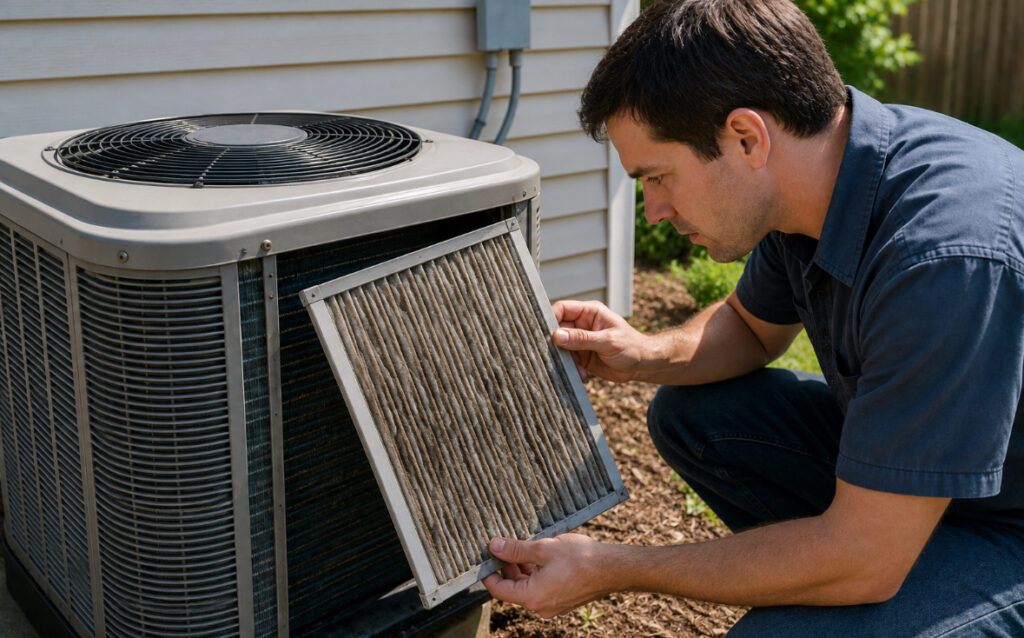
Even the best air filter becomes ineffective if it is not replaced regularly. Over time, filters become clogged with debris, which restricts airflow and reduces your system’s efficiency. This not only affects air quality but also forces your HVAC system to work harder.
For most homes, filters should be checked monthly and replaced every 1 to 3 months. Homes with pets, higher occupancy, or allergy concerns may require more frequent changes.
Factors that affect replacement frequency:
- Presence of pets or indoor allergens
- Frequency of HVAC system usage
- Type and quality of filter installed
- Local air quality and seasonal conditions
Upgrading your filter system or combining it with air cleaning systems can significantly improve filtration and reduce airborne contaminants.
What Are Air Scrubbers and How Do They Improve Air Quality

How Air Scrubbers Remove Contaminants and Odors
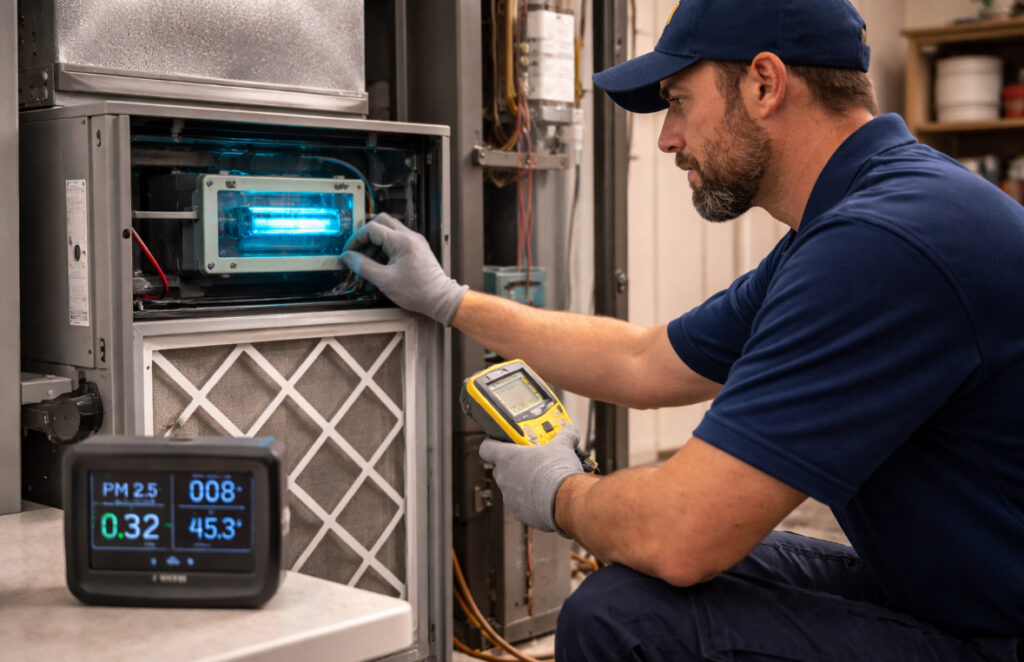
Air scrubbers are advanced air purification devices installed directly into your HVAC system. Unlike standard filters that trap particles, air scrubbers actively clean the air by neutralizing contaminants at a microscopic level.
These systems use technologies such as ionization or UV light to break down pollutants, including bacteria, viruses, and odors. As air circulates through your system, it is continuously cleaned, improving overall indoor air quality.
Air scrubbers are especially effective in homes where traditional filtration is not enough to control airborne particles and odors.
When an Air Scrubber Is Recommended for Your Home
Air scrubbers are not always necessary for every home, but they provide significant benefits in certain situations. Homes with persistent air quality issues or higher exposure to contaminants often see the most improvement.
You may benefit from an air scrubber if:
- You experience ongoing allergy or respiratory issues
- Your home has noticeable odors that don’t go away
- You have pets or high indoor activity levels
- You want advanced protection against airborne contaminants
When combined with proper filtration and air cleaning systems, air scrubbers create a more controlled and healthier indoor environment.
Why Ductwork Plays a Critical Role in Indoor Air Quality
Your ductwork system acts as the pathway that distributes air throughout your home. Every time your HVAC system runs, air travels through these ducts, carrying both conditioned air and any contaminants present inside them. If ducts are not clean or properly maintained, they can become a major source of indoor air pollution rather than a solution.
In many homes, especially older properties, duct systems accumulate dust, debris, and even moisture over time. This buildup affects not only air quality but also airflow efficiency. Even with high-quality home air filters, contaminants inside ducts can still circulate if the system itself is not clean.
Dust and Contaminant Buildup Inside Air Ducts
Air ducts naturally collect particles as air passes through them. Over time, this includes dust, pet dander, pollen, and other airborne debris. In some cases, moisture can also enter the system, creating conditions where mold or bacteria may develop.
This buildup is not always visible but can significantly impact indoor air quality. As the system continues to operate, these particles are disturbed and redistributed into your living space.
Common contaminants found in duct systems:
- Dust and fine debris from daily indoor activity
- Pet hair and dander
- Pollen and outdoor pollutants
- Mold spores in moisture-prone areas
Without proper maintenance, these contaminants continue to circulate, reducing the effectiveness of your overall indoor air quality strategy.
How Dirty Ducts Circulate Pollutants Indoors
When ducts are dirty, your HVAC system essentially spreads contaminants throughout your home every time it runs. Instead of delivering clean, conditioned air, the system pushes particles into living areas, where they can affect both comfort and health.
This is especially noticeable in homes where dust accumulates quickly, or where allergy symptoms seem worse indoors than outside. Dirty ducts can also contribute to stale or musty odors that linger even after cleaning other areas of the home.
Over time, this continuous circulation of pollutants can impact respiratory health and reduce overall indoor comfort. Addressing the source through professional duct cleaning helps break this cycle and improve air quality at its core.
How Regular Duct Cleaning Improves Airflow and Air Quality

Duct cleaning plays a direct role in both improving airflow and reducing airborne contaminants. When ducts are clogged with dust and debris, airflow becomes restricted, forcing your HVAC system to work harder to distribute air throughout your home.
By removing this buildup, your system can operate more efficiently and deliver cleaner air. This not only improves comfort but also supports better system performance over time.
| Benefit | What It Improves | Result |
|---|---|---|
| Clean ducts | Reduced contaminants | Better air quality |
| Improved airflow | Less restriction | Even cooling and heating |
| Lower system strain | Efficient operation | Reduced energy usage |
| Odor reduction | Removal of buildup | Fresher indoor air |
Regular duct cleaning ensures your HVAC system is not circulating pollutants and helps maintain a healthier indoor environment.
Best Practices to Maintain Healthy Indoor Air Quality
Maintaining indoor air quality is not a one-time task. It requires consistent attention to your HVAC system, airflow, and overall home environment. A combination of proper maintenance, filtration, and ventilation ensures long-term air quality improvement.
Routine Maintenance and System Checks
Routine HVAC maintenance is essential for keeping your system operating efficiently and maintaining clean airflow. Over time, components such as coils, filters, and fans collect dust and debris, which can reduce performance and affect air quality.
Regular inspections help identify issues early and prevent them from escalating into larger problems.
Key maintenance practices include:
- Replacing or upgrading air filters regularly
- Inspecting and cleaning system components
- Checking airflow and duct condition
- Ensuring proper system operation
Combining maintenance with advanced air cleaning systems provides an added layer of protection against airborne contaminants.
Managing Humidity and Ventilation in Your Home
Humidity plays a major role in indoor air quality. High moisture levels can create an environment where mold, bacteria, and allergens thrive. On the other hand, very low humidity can cause dryness and discomfort.
Proper ventilation ensures that fresh air circulates through your home while removing stale or contaminated air. This balance helps maintain a healthier indoor environment.
Effective humidity and ventilation strategies:
- Use dehumidifiers in moisture-prone areas
- Ensure proper ventilation in kitchens and bathrooms
- Keep airflow consistent throughout the home
- Monitor indoor humidity levels regularly
Managing humidity and ventilation is important, but getting lasting results depends on choosing the right air quality specialist. Working with a trusted expert ensures your Newark home maintains healthy indoor air quality while preventing recurring issues caused by poor air circulation or excess moisture.
Why Choose Maverick Ambitions for Indoor Air Quality Solutions in Newark, NJ

Improving indoor air quality requires more than just basic maintenance. It involves understanding how your entire HVAC system, ductwork, and filtration work together to create a healthy indoor environment. Choosing the right service provider ensures these factors are addressed properly.
At Maverick Ambitions, the focus is on identifying the root causes of air quality issues rather than just treating surface symptoms. From evaluating home air filters to inspecting duct systems and recommending advanced air cleaning systems, every solution is tailored to improve long-term performance.
With professional indoor air quality services and targeted duct cleaning, your home can maintain cleaner air, better airflow, and improved comfort. If you’re noticing dust buildup, allergies, or stale indoor air, taking action now can make a lasting difference in your home’s environment.