Skip to content

When your air conditioner suddenly stops working on a hot summer afternoon, indoor temperatures can rise quickly and create uncomfortable—and sometimes unsafe—conditions. In Newark, high humidity and heat can make a no-cooling situation especially stressful for families with young children, older adults, or anyone with health concerns.
The good news is that not every AC shutdown means a major system failure. A tripped breaker, clogged air filter, blocked condensate drain, or thermostat issue can sometimes be corrected with a few basic checks. Read below to learn what homeowners should do first, what warning signs to look for, and when professional emergency AC repair in Newark is the safest solution.
Stay Safe and Check for Immediate Signs of a System Shutdown

Before troubleshooting, focus on safety and assess how your system is behaving. If the house is becoming uncomfortably warm, close blinds, reduce heat-producing activities, and use ceiling fans to keep air moving. If anyone in the home is sensitive to heat, consider relocating to a cooler part of the house or another safe location until cooling is restored.
Take a few moments to observe the system. Does the thermostat display appear blank? Is the outdoor condenser completely silent? Do you hear unusual buzzing, clicking, or humming? Is there water around the indoor air handler? These details can help identify whether the problem involves electrical power, condensate drainage, airflow, or a mechanical failure.
Immediate Signs to Note
| What You Observe | What It May Indicate |
|---|---|
| Thermostat Screen Is Blank | Loss of power or dead batteries |
| Outdoor Unit Is Not Running | Breaker trip, capacitor failure, or contactor issue |
| Water Around Indoor Unit | Condensate drain blockage |
| Burning Smell | Electrical overheating |
| Loud Buzzing or Clicking | Failing electrical components |
If you notice smoke, a strong burning odor, or repeated breaker trips, turn the system off immediately and arrange for professional air conditioning repair services rather than attempting additional troubleshooting.
Verify Thermostat Settings and Electrical Power
One of the most common causes of a sudden AC shutdown is a simple control or power issue. Homeowners are often surprised to discover that the thermostat was switched to “Off,” the batteries have failed, or a circuit breaker has tripped during a period of heavy demand.
Start by confirming that the thermostat is set to Cool and the temperature setting is several degrees below the current indoor temperature. If the display is blank or unresponsive, replace the batteries if applicable. Next, check your electrical panel for tripped breakers labeled “AC,” “Air Handler,” or “Furnace.” Reset a breaker only once. If it trips again immediately, leave it off and contact a professional technician.
In Newark, electrical components such as capacitors and contactors are commonly stressed during hot weather because air conditioners may start and stop dozens of times per day. If the thermostat and breakers appear normal but the system still does not respond, professional AC repair in Newark can pinpoint the underlying electrical issue safely.
Check the Air Filter and Airflow Around the System

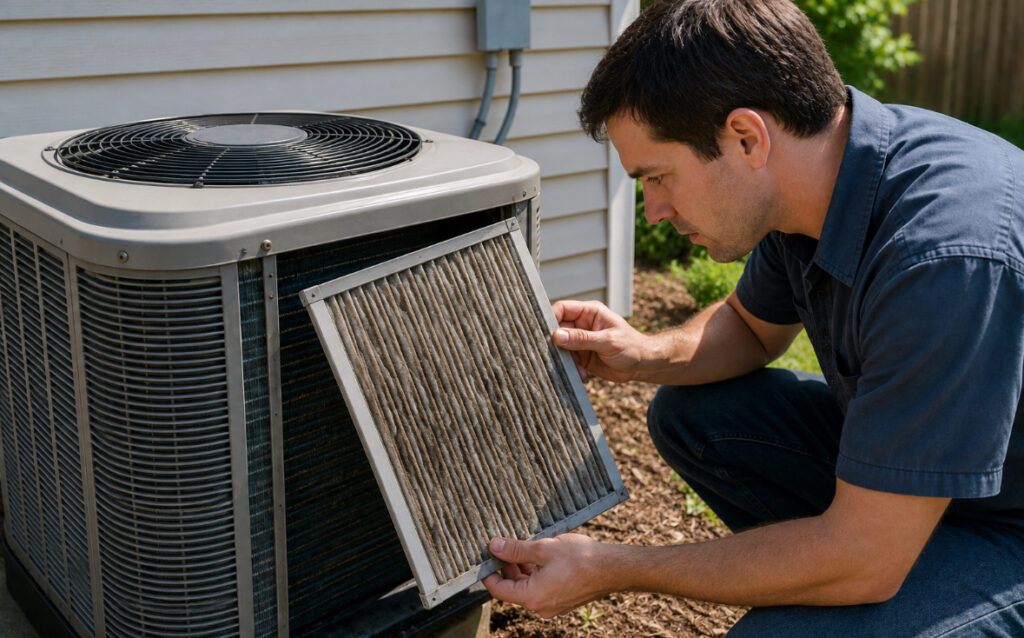
Restricted airflow is one of the most overlooked reasons an air conditioner stops cooling during very hot weather. When the filter becomes heavily loaded with dust, the system cannot move enough air across the evaporator coil. As a result, the coil temperature drops too low, ice begins to form, and the air conditioner may shut down or stop producing cold air altogether.
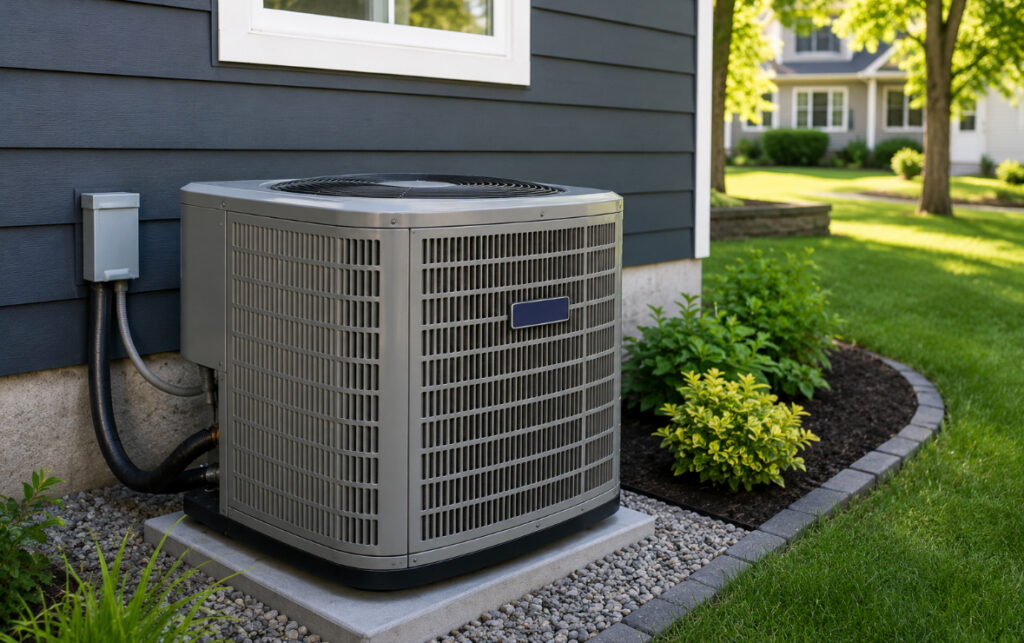
Start by removing the return air filter and inspecting it under a light. If the surface appears gray and packed with dust, replace it with a clean filter of the correct size. Also check that supply and return vents are open and unobstructed by furniture, rugs, or curtains. Outside, remove leaves, grass clippings, and debris from around the condenser and maintain at least two feet of open space to allow proper heat rejection.
In many Newark homes, a clogged filter is the only issue preventing normal operation. If cooling improves after restoring airflow, monitor the system closely. If it continues to struggle, professional air conditioning repair services can identify deeper airflow or mechanical problems.
Look for Ice Buildup, Water Leaks, or Unusual Noises
Visual and audible warning signs often reveal that the system is experiencing more than a minor interruption. Ice on refrigerant lines, water around the indoor unit, and new mechanical noises typically indicate underlying issues that should be addressed before restarting the equipment.
Ice on Refrigerant Lines
If you see frost or solid ice on the copper lines near the indoor or outdoor unit, the evaporator coil may be frozen due to airflow restrictions or low refrigerant. Turn the system off and allow it to thaw completely before attempting to run it again.
Water Around the Air Handler
Pooled water near the furnace or attic air handler often points to a clogged condensate drain line. Many systems include a float switch that shuts the air conditioner off to prevent overflow and water damage.
Buzzing, Grinding, or Rattling Sounds
Unusual noises can indicate failing capacitors, worn motor bearings, loose blower components, or compressor issues. These sounds are important clues that the system needs professional attention.
If any of these symptoms are present, avoid repeated restart attempts. Prompt AC repair in Newark can prevent additional damage and restore cooling more safely.
Common Reasons Air Conditioners Stop Working on Hot Days in Newark

When temperatures in Newark climb into the 90s, your air conditioner is placed under its greatest seasonal stress. Components that may have been weakening for months can finally fail after hours of continuous operation. In our experience, most midsummer no-cooling calls are caused by a handful of common issues that develop gradually and become noticeable only when the system is working at full capacity.
Weak Capacitors and Contactor Failures
Capacitors provide the electrical boost needed to start the compressor and fan motors. As they age, their microfarad readings decline until the motors can no longer start reliably. Contactors also wear over time, and their internal contacts may become pitted or burned. On very hot days, these components often fail suddenly, leaving the outdoor unit silent even though the thermostat is calling for cooling.
Frozen Evaporator Coils
The evaporator coil can freeze when insufficient air passes across it or when refrigerant levels are low. Ice gradually covers the coil and blocks heat transfer, causing airflow to weaken and cooling to stop. Homeowners may notice frost on the refrigerant lines or warm air from the vents. Once the coil is frozen, the system usually needs to be shut down and allowed to thaw completely.
Clogged Condensate Drain Lines
During humid summer weather, an air conditioner may remove several gallons of water from the indoor air each day. If algae, dirt, or zooglea buildup blocks the condensate drain line, water can back up into the drain pan. Many systems include a float switch that automatically shuts the air conditioner off to prevent ceiling stains, drywall damage, or overflow around the air handler.
Overheated Compressors
The compressor is the heart of the cooling system and operates under significant pressure during extreme heat. Dirty condenser coils, restricted airflow, or existing refrigerant problems can cause operating temperatures to rise beyond normal limits. In some cases, the compressor enters thermal overload and shuts itself down temporarily. Repeated overheating can shorten compressor life and lead to one of the most expensive AC repairs.
Thermostat and Sensor Problems
Modern air conditioning systems rely on thermostats, temperature sensors, and control boards to coordinate every cooling cycle. If a sensor sends inaccurate readings or a communication error occurs, the system may fail to start or may shut down unexpectedly. These issues can mimic more serious mechanical failures, which is why proper diagnostic testing is essential.
Many of these problems begin developing long before the system stops cooling completely. Identifying the underlying cause quickly helps prevent additional damage and allows homeowners to restore comfort before indoor temperatures become unbearable.
What You Should Avoid Doing to Prevent Further Damage
When your air conditioner stops working, it is natural to keep resetting the thermostat or breaker in hopes that the system will restart. Unfortunately, repeated attempts to force the unit to run can make the problem worse and lead to more expensive repairs.
To protect the equipment, avoid these common mistakes:
- Do Not Reset the Breaker Repeatedly: If the breaker trips again, there is likely an electrical fault that requires professional diagnosis.
- Do Not Chip Away Ice: Sharp tools can puncture the evaporator coil and create a refrigerant leak.
- Do Not Continue Running a Frozen System: Operating with ice buildup can damage the compressor.
- Do Not Ignore Burning Smells: Electrical overheating should be addressed immediately.
- Do Not Add Refrigerant Yourself: Refrigerant handling requires specialized tools and EPA-certified technicians.
If these steps do not restore cooling, or if you notice repeated breaker trips, ice buildup, water leaks, or unusual electrical odors, the problem likely requires professional diagnosis. At that point, contacting an experienced HVAC technician is the safest way to identify the root cause and prevent additional damage to your air conditioning system.
When to Call for Professional Emergency AC Repair
Some air conditioning problems can be resolved with a filter change or thermostat adjustment, but others require immediate professional attention. If indoor temperatures continue rising, the system trips breakers, or you notice ice, water leaks, or unusual electrical odors, it is time to contact an experienced HVAC contractor.
Professional technicians have the tools to test capacitors, verify refrigerant pressures, inspect motors, and diagnose control problems accurately. This allows the root cause to be identified quickly so cooling can be restored as soon as possible.
If your air conditioner stops working during a hot Newark afternoon and basic troubleshooting does not solve the issue, prompt emergency air conditioning repair can help prevent further damage and restore comfort safely.
Why Choose Maverick Ambitions for AC Repair in Newark, NJ

When your air conditioner stops working in the middle of a hot day, you need more than a temporary fix. You need an HVAC contractor who can diagnose the problem accurately and restore reliable cooling as quickly as possible.
Maverick Ambitions provides trusted air conditioning services for homeowners throughout Newark. Our experienced technicians handle everything from clogged drain lines and capacitor failures to refrigerant issues and compressor problems.
Whether your system requires prompt emergency air conditioning service or a full AC installation and replacement, we focus on practical solutions that restore comfort, improve efficiency, and help keep your home cool during Newark’s hottest summer days.